Heatwave: The Hidden Danger to Your Brain
#வெப்ப அலை#மூளை#மனநலம்#காலநிலை மாற்றம்#லண்டன் வெப்பம்#கேத்தரின் தாம்சன்#எம்மா லாரன்ஸ்#ஸ்கிசோஃப்ரினியா#தற்கொலை#குழந்தைகள் மூளை வளர்ச்சி#பொது சுகாதாரம்#36.1°C
மொழி:
🔊
இந்தக் கட்டுரையைக் கேளுங்கள்
🤖 AI மொழிபெயர்ப்பு — மனித ஆசிரியரால் மதிப்பாய்வு செய்யப்பட்டது · AI translation, human-reviewed
Heatwave: the hidden danger to your brain
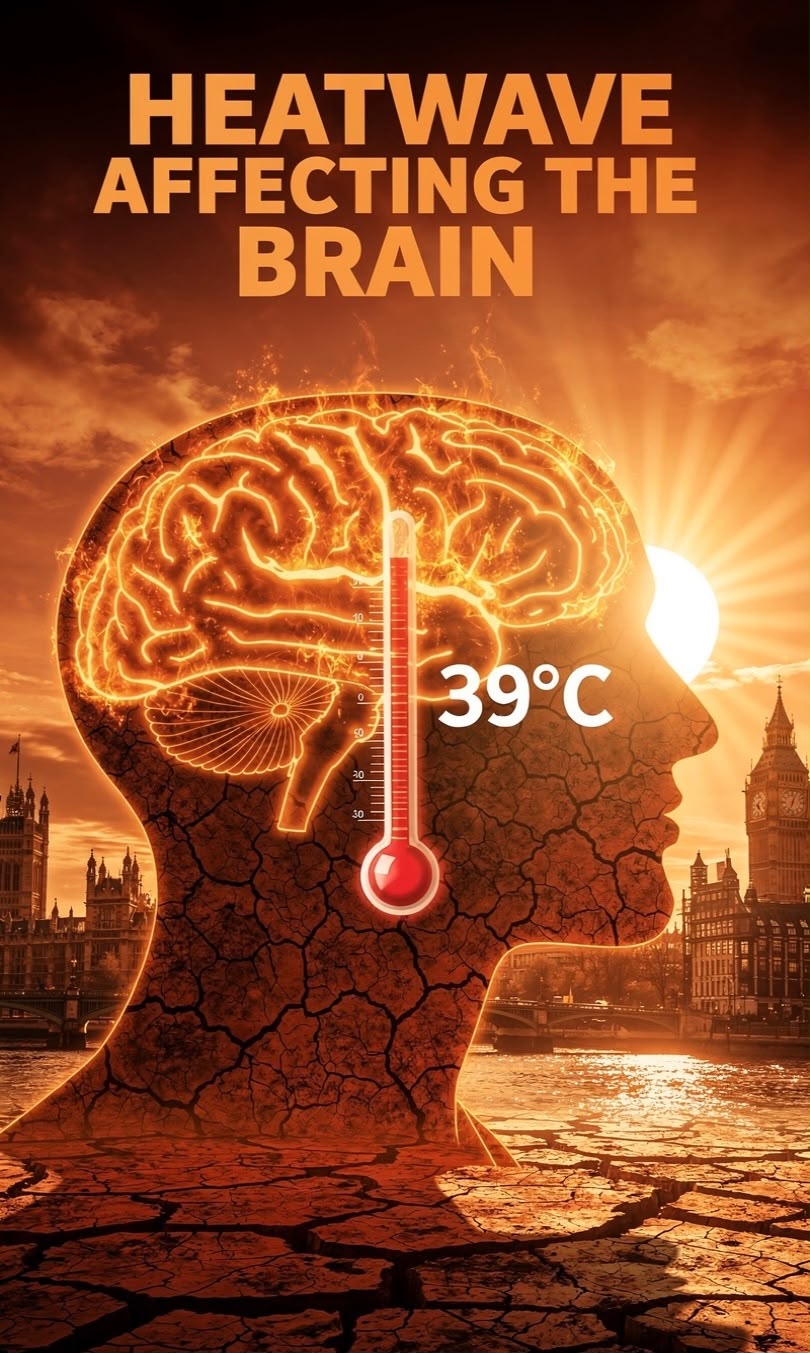
This week, London was scorching. Yesterday alone, the UK recorded 36.1°C—the highest June temperature ever so far. But my phone’s weather app said it felt like 39°C.
This kind of heat in June is alarming. According to the Met Office, in the 1991–2020 period, England’s average June maximum temperature was only 19°C. But this heat doesn’t just hit the body. It affects our mind, our brain, and our thinking.
1. Can’t think clearly — is this happening to you too?
Speaking from personal experience: I simply can’t think clearly. Heat disrupts focus. The mind feels muddled. Just imagining the situation of people who work outdoors in even hotter countries is frightening.
Catherine Thomson, a cognitive psychologist at Liverpool Hope University, says it is very difficult to study directly how a heatwave affects our thinking.
So she studied firefighters. Their cognition was tested before and after a 15-minute training session inside a burning building.
Result: immediately after heat exposure, concentrating became difficult. Only after cooling down for 20 minutes did they return to normal. And that was just 15 minutes of heat. What would the effect be of a heatwave that lasts for many days? Even Thomson doesn’t know. “You’d have to send cognitive tests to thousands of people before the heatwave. Because it’s so difficult, nobody has done it,” she says.
2. Heat = irritability + violence: what do studies say?
Many studies confirm that as temperatures rise, people behave with more irritability and violence. But these are mostly correlational studies. Establishing direct causation is difficult.
3. The greatest risk for people with mental health conditions
A 2023 Oxford study reports a shocking finding: during a heatwave, the rate of hospital admissions among people with mental health problems increases by 9.7%.
“People living with mental health problems are particularly vulnerable to the physical impacts of heat,” says researcher Emma Lawrence.
Example: during the 2021 Canada heatwave, people with schizophrenia were three times more likely to die.
Joshua Wortzel of Hartford HealthCare says, “As heat increases, the mental health impacts worsen.”
4. What does heat do to the brain? “A million-dollar question”
What exactly does abnormal heat do directly to the brain?
Animal studies offer some clues:
1. Neurotransmitter changes: in rats, serotonin levels increased under high heat.
2. Disruption of brain networks: heat may interfere with how brain cells communicate.
3. Oxygen shortage: oxygen delivery to the brain may be affected.
“There are many biological reasons why heat can negatively affect the brain,” says Wortzel.
But many other things also change during heat—lack of sleep, reduced exercise, being stuck indoors. These too can affect mental health.
5. Children and young people — higher risk
New studies are alarming:
Suicide rate: in the US, when the average monthly temperature increases by 1°C, the suicide rate among 15–24-year-olds increases by 2.97%. This is twice as high as for those over 24.
Brain development: children exposed to extreme heat or cold show changes in the brain’s white matter at ages 9–12.
“Very young children being exposed to extreme temperatures could affect their brain development,” says Lawrence.
6. The future: 7 times more heatwaves
A projection suggests that children born in 2020 will experience seven times more heatwaves than their grandparents.
“We need to be serious about adapting ourselves to a warming world,” says Lawrence.
Her Climate Action Week event was supposed to take place in London. But the event about extreme heat was cancelled due to extreme heat.
What should we do?
1. Stay cool: AC, fan, shade—reduce body temperature
2. Hydration: drink more water
3. Extra caution for people with mental health conditions: additional monitoring is needed during a heatwave
4. Protect children: avoid playing outside
5. Sleep: keep the room cool at night
Heat is no longer just “discomfort.” It is a public health emergency—especially for the brain and the mind.
Sources:
- Liverpool Hope University: Dr Catherine Thomson’s study
- University of Oxford: 2023 heatwave and mental health study
- UK Met Office: June temperature data, 1991–2020
- Hartford HealthCare: Dr Joshua Wortzel
- Climate Action Week event, London
Edited by: Arivuppasigallery

உங்கள் படைப்பைச் சமர்ப்பியுங்கள்
கவிதை, கட்டுரை, கண்டுபிடிப்பு, அனுபவங்களை அறிவுப்பசி மூலம் உலகறியச் செய்யுங்கள்.
Discussion (0)
Be the first to comment.
தொடர்புடைய கட்டுரைகள்


தொடர்புடைய கருவிகள்