For Tamil Children in Switzerland: An 8-Week Tamil Practice Program for the Summer Holidays - A Complete Guide
#சுவிஸ் தமிழ்#கோடை விடுமுறை#தமிழ் பயிற்சி#தமிழ் கல்வி#புலம்பெயர் தமிழர்#சுவிட்சர்லாந்து தமிழர்#தமிழ் மொழி#சிறுவர் தமிழ்#தமிழர் பண்பாடு#அறிவுப்பசி#தமிழ் மொழி பயிற்சி#கோடை விடுமுறை திட்டம்
மொழி:

🤖 AI மொழிபெயர்ப்பு — மனித ஆசிரியரால் மதிப்பாய்வு செய்யப்பட்டது · AI translation, human-reviewed
01 Aavani 2026
Preface
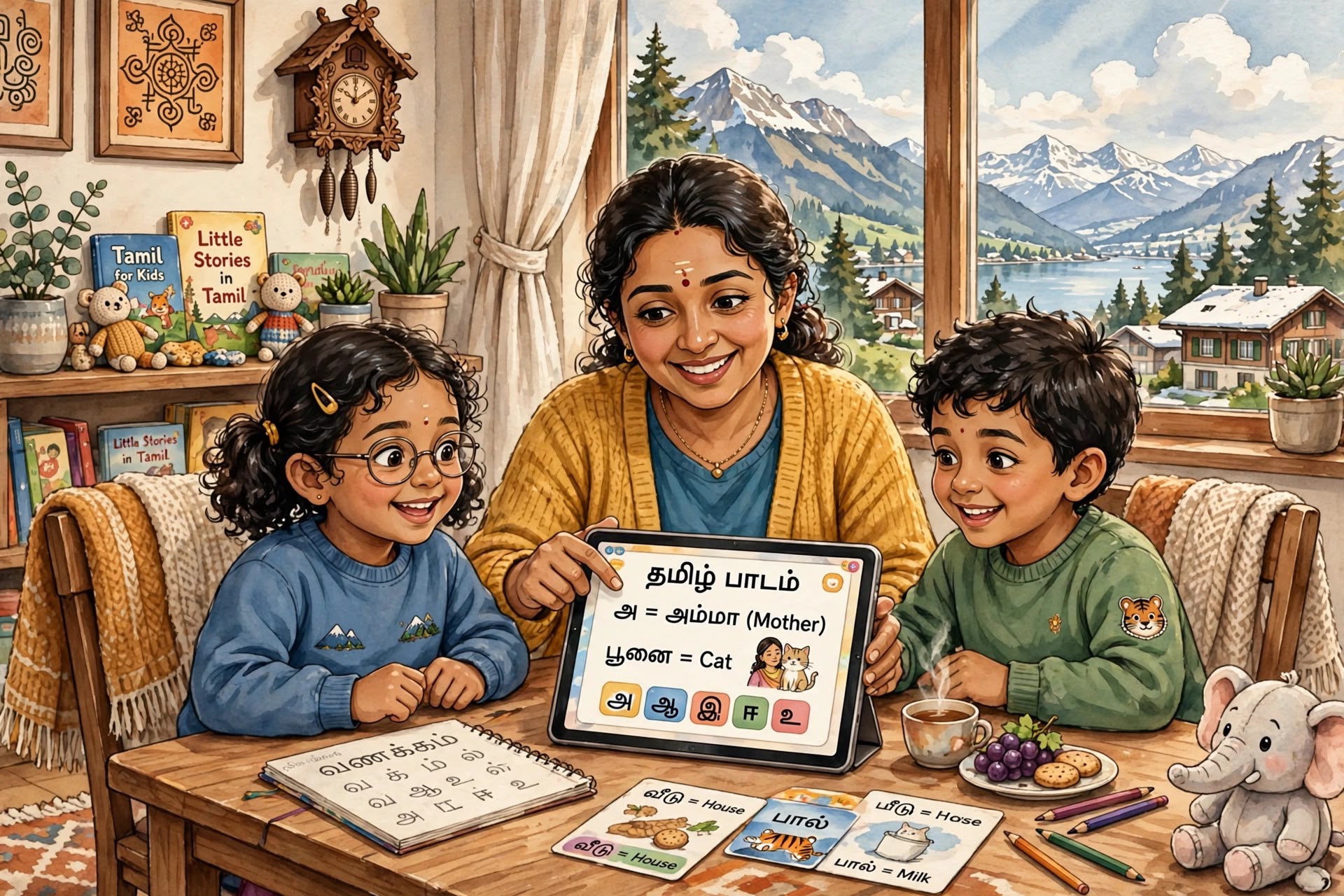
Do you know what the biggest challenge is for our Tamil children who are born and raised on Swiss soil? In an environment surrounded by many languages—German, French, English—our mother tongue, Tamil, is slowly being forgotten. Even if parents speak Tamil at home, children replying in German has become normal in Swiss Tamil families. This summer holiday is the best opportunity for that! No school, no homework—eight full weeks are available for us to learn Tamil.
In this article, we will look in detail at an eight-week Tamil practice plan that suits the Swiss context and uses play-based learning—so children do it willingly, without hating it.
This is a guide developed from the experience of Arivuppasi.
1. Why is summer-holiday Tamil practice important?
Preventing language loss: During school days, German is spoken most of the time, so contact with Tamil decreases. Continuous practice in summer keeps the language alive.
Cultural connection: Tamil is not just a language; it is our culture, history, and identity. Tamil is essential to connect with grandfathers and grandmothers.
Brain development: Research says that children who learn two languages have stronger thinking skills and memory.
Stress-free learning: In summer, without the burden of school lessons, Tamil can be taught through play.
2. What parents should do before starting the practice
• Goal setting: Goals should match the child’s age. Ages five to seven—speech and an introduction to writing. Ages eight to twelve—reading, writing, short stories.
• Timetable: Only forty-five minutes every day. 10:00 to 10:45 a.m. is the best time. Not by forcing—joyfully.
• A Tamil environment: Make Tamil conversation compulsory at home. Let Swiss Tamil radio and Tamil songs play.
• Materials: Tamil letter cards, coloured pencils, storybooks, Arivuppasi practice lessons.
3. Detailed eight-week practice plan
Weeks 1–2: Foundations of spoken Tamil
• Aim: Speaking without hesitation.
• Practice: Ten new words every day. Ask in Tamil, “What did you do today?” Name kitchen items in Tamil. Sing one Tamil song.
• Games: Storytelling from pictures. Tamil letter hunt—write Tamil names for household objects and stick them on.
Weeks 3–4: Introduction to letters and reading
• Aim: Vowels and consonants.
• Practice: Writing letters in sand, writing while colouring. Forming words by combining uyirmei letters. One page of Tamil reading daily.
• Tool: Arivuppasi Tamil letter practice worksheets.
Weeks 5–6: Vocabulary and an introduction to grammar
• Aim: Linking words into sentences.
• Practice: Introduction to nouns and verbs. Sentences like “I went to school.” Writing a five-line diary entry in Tamil every day. Memorising one Thirukkural.
• Games: Word games, crosswords.
Weeks 7–8: Culture, stories, and creativity
• Aim: Helping children love Tamil.
• Practice: Bharathiyar songs, Aathichoodi, telling grandmother’s stories. Explaining Tamil New Year and Pongal. Getting the child to write a short story. Talking about family history in Tamil.
• Finale: At the end of summer, have the child speak ten lines in Tamil on the topic “My Summer Holiday,” and record it on video.
4. Practical tips for Swiss parents
1. No punishment—only praise. Even if they say one word correctly, praise them: “Wonderful.”
2. If they mix in German, don’t correct them; you reply only in Tamil.
3. Enrol in summer classes run by Swiss Tamil temples and Tamil schools.
4. Provide opportunities to play with Tamil friends.
5. Use the “Tamil Computing” curriculum available in the Arivuppasi association.
5. Avoiding common mistakes
• Don’t try to teach too much in a single day.
• Don’t compare your child with other children.
• Don’t scold for spelling mistakes; encourage.
• Don’t turn Tamil learning into a school subject—turn it into play.
Conclusion
In Switzerland, the great responsibility of safeguarding our Tamil identity rests with us as parents. This eight-week plan is only a beginning. With continued practice, our children will grow up proficient in both German and Tamil. Tamil will live, and Tamils will thrive! Let us make this summer holiday a Tamil summer!
Frequently Asked Questions
Q1: Will learning Tamil affect German at Swiss school?
A: No. According to research, other languages become strong only when the mother tongue is strong. Tamil supports German.
Q2: What should we do if the child refuses to speak Tamil?
A: Don’t force it. You speak in Tamil and spark interest through songs and stories. It becomes a habit in twenty-one days.
Q3: What is the best age to start?
A: Spoken practice can begin from age three. For writing practice, age five is best.
All the printable worksheets and letter cards needed for this plan are available for free in the Arivuppasi Knowledge Library (knowledge). Download and use them.
Long live Tamil! May Tamil children flourish!உங்கள் படைப்பைச் சமர்ப்பியுங்கள்
கவிதை, கட்டுரை, கண்டுபிடிப்பு, அனுபவங்களை அறிவுப்பசி மூலம் உலகறியச் செய்யுங்கள்.
Discussion (0)
Be the first to comment.
கல்வி — பிரபலமானவை
- 1யாழ்ப்பாணப் பல்கலைக்கழகத்தில் புலம்பெயர் மாணவர்கள் சேர்வது எப்படி? - முழுமையான வழிகாட்டி
- 2சுவிட்சர்லாந்தில் தமிழ் பிள்ளைகளுக்கு தாய்மொழி கற்பிக்க 5 இலவச செயலிகள்
- 3Reading for Curiosity: A Lifelong Practice
தொடர்புடைய கட்டுரைகள்

கல்வி
யாழ்ப்பாணப் பல்கலைக்கழகத்தில் புலம்பெயர் மாணவர்கள் சேர்வது எப்படி? - முழுமையான வழிகாட்டி
26 ஜூலை, 2026
கல்வி
சுவிட்சர்லாந்தில் தமிழ் பிள்ளைகளுக்கு தாய்மொழி கற்பிக்க 5 இலவச செயலிகள்
24 ஜூலை, 2026

கல்வி
Reading for Curiosity: A Lifelong Practice
13 ஜூன், 2026

இலக்கியம்
The Great Gatsby - எஃப். ஸ்காட் ஃபிட்ஸ்ஜெரால்ட்
13 செப்., 2026
தொடர்புடைய கருவிகள்